Flex Series: flexible grinding for scrap metal processing
Versatility, efficient productivity, and build quality: let’s explore the strengths of Flex hammer mills
In the processing of scrap metal, variability is an intrinsic part of the process, and those working in the industry are well aware of this challenge: input materials are never all the same, volumes change, and ideal conditions have a limited duration. It is in this context that the true effectiveness of a mill is measured: not so much when everything is standardised, but when the process has to guarantee stability despite the many variables that come into play.
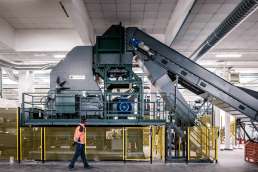
Flex hammer mills were developed from this awareness and from the direct experience that we gained in the field. The series is the result of observing plants in operation and constant feedback from customers and operators, which enabled us to offer a reliable solution for the flexible grinding of scrap metal. A technology developed to work continuously, ensuring process control, structural quality and more efficient and optimised plant operation over time.
The Flex series is designed to adapt to the real variability of scrap, maintaining operational continuity and process control.
A flexible approach to grinding
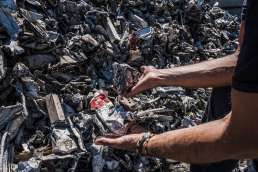
Designed for processing small and medium-sized scrap metal, the Flex series is characterised by its wide range of applications and its ability to meet the needs of different production contexts. The mills efficiently process different materials such as small electric motors, transformers, scrap from WEEE, shredded aluminium, tin and iron with plastic.
This versatility is supported by the patented interchangeable cradle, which allows Panizzolo mills to adapt quickly to grinding multiple types of scrap or changing piece size in processing. In an environment where material variability is the norm, flexibility becomes a decisive element in maintaining stable production performance.
Constant productivity under varying operating conditions
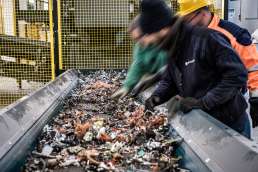
The Flex series ensures a productivity of up to 14 tonnes per hour, depending on the model and material handled. The continuous work cycle and the use of high-efficiency components allow constant processing volumes and output material quality.
Process continuity is not only a production advantage, but an element that affects the overall organisation of the plant. Working with stable parameters allows better planning of downstream activities and contributes to maximising overall output, improving profitability even with varying workloads.
Process stability
The oscillating table with eccentric, designed in-house, regulates the movement of material during loading and unloading, ensuring a uniform flow in the grinding process. This solution makes it possible to avoid accumulations or discontinuities in the passage of material, contributing to the regularity of the work cycle.
This is complemented by a system that integrates 22 to 26 vibration dampers installed between the base and the floor, capable of damping approximately 80% of the vibrations generated by processing. The benefit is not limited to operational comfort, but directly affects component life span, the structural integrity of the machinery and process continuity in the long term.
Intuitive maintenance
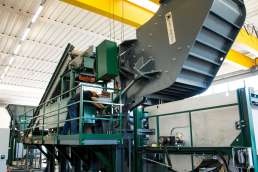
Ease of maintenance is one of the aspects that make a real contribution to the stability of a machine or plant. For this reason, maintenance activities have been designed for maximum practicality: they require a small number of operators and do not require special equipment or complex procedures. Operations such as periodic checks and greasing are quick and intuitive, contributing to minimising downtime and reducing operating costs. An approach that facilitates daily management and improves reliability.
Optimisation of operational consumption
In recycling processes, energy is an increasingly important cost item and a critical parameter in the overall evaluation of a plant. Consequently, one of the central aspects in the design of the Flex series is the optimisation of the relationship between energy input and production output.
The mills are designed to ensure high performance with low energy consumption, contributing to reduced operating costs and improved processing sustainability. Specifically, according to an analysis based on publicly available market data, the Flex series offers energy savings of between 22% and 62% compared to other models with similar motors. The control software contributes to this balance by automatically monitoring and adjusting the main operational steps, limiting energy losses and keeping the process at optimum efficiency levels.
Designed for the long term
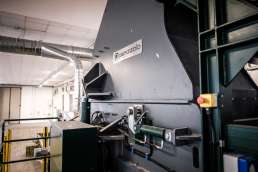
The Flex series reflects our design approach in every construction detail. Structural solidity comes from a design conceived to cope with the stresses of grinding, without compromising on durability. The high-quality steelwork and UNI EN ISO 3834-2 certified welds guarantee a reliable structure, even under the most demanding operating conditions.
This balance between design and construction allows the mill to maintain consistent performance, limiting wear, unscheduled downtime and extraordinary interventions. An approach that translates into machinery and solutions capable of sustaining the process over the long term, allowing customers to enhance the value of their investment and build stable, reliable plants ready to evolve over time.